
100% sourdough: health, sustainability, biodiversity
Bread is one of the oldest foods in our diet. Yet its production has changed profoundly over the past few decades. As processes have accelerated, natural fermentation has often been replaced by faster, more standardized methods.
Today, sourdough is making a strong comeback in artisanal kitchens and committed restaurants. Why this renewed interest? What does sourdough actually change in terms of taste, digestibility, and overall quality of bread?
At Entropy Restaurant, we set out to explore these questions through a workshop dedicated to sourdough bread, natural fermentation, and local flour. An immersion that allowed us to better understand how time, raw ingredients, and living processes shape a richer and more sustainable bread.
Sourdough or yeast: two visions of bread
The difference between sourdough and yeast is not just a baking technique. It reflects two fundamentally different approaches to fermentation.
Industrial yeast acts quickly. It allows dough to rise in one to two hours with predictable and consistent results. It is a tool designed for efficiency and standardization.
Sourdough, on the other hand, follows a natural logic. Made only from flour and water, it gradually develops an ecosystem of wild yeasts and lactic acid bacteria. This slow fermentation can take several hours, or even several days.
This time dimension deeply transforms the bread:
- more complex and nuanced aromas
- a softer crumb and a more balanced texture
- improved digestibility
- longer natural shelf life
Where yeast produces standardized bread, sourdough gives rise to a living, evolving product, deeply connected to its environment.
The benefits of sourdough bread
Beyond its taste qualities, sourdough bread also offers several nutritional advantages.
During fermentation, microorganisms begin breaking down part of the carbohydrates and proteins in the flour. This acts as a form of natural pre-digestion, which can make bread easier to digest for some people.
Slow fermentation also influences the glycemic index of bread. Sugars are absorbed more gradually by the body, helping to avoid sharp energy spikes followed by crashes.
Finally, sourdough improves the bioavailability of certain minerals. By naturally reducing compounds present in grains, it facilitates the absorption of iron, zinc, and magnesium.
Sourdough therefore does not only transform the taste of bread: it also changes the way our bodies interact with grains.
Flour: the true starting point
We often talk about sourdough, but much less about the flour that brings it to life.
Yet the quality of flour directly influences fermentation, the structure of the bread, and its aromatic richness. A good sourdough starts with good grain.
To better understand this fundamental aspect, our team visited Les Grands Blés, a Belgian mill committed to local and agroecological production.
There we discovered a supply chain that prioritizes:
- wheat grown in Belgium
- agriculture without pesticides or synthetic fertilizers
- cold stone milling that preserves the grain’s nutritional qualities
This approach produces a less standardized but more “alive” flour, capable of fully expressing the potential of natural fermentation.
The workshop reminded us of a often-forgotten truth: sourdough does not start with sourdough. It starts in the soil, in the choice of seeds, in wheat cultivation, and in how flour is produced.
Sourdough as a sustainable choice
The return of sourdough also fits into a broader reflection on food sustainability.
Thanks to its long fermentation, sourdough bread naturally keeps longer. It dries out less quickly and helps reduce food waste.
But the benefits go beyond the final product.
This approach also encourages:
- more respectful farming practices
- shorter supply chains
- less industrial processing
- better valorization of raw ingredients
Sourdough thus becomes a symbol of a more coherent food chain, where each step—from field to plate—regains meaning.
Looking back at our sourdough workshop
This Monday, the kitchen team at Entropy Restaurant took part in a discovery day at the Les Grands Blés mill.
The workshop continued with training led by Alice Crosby, a specialist in natural fermentation.
The goal was simple: understand sourdough through practice.
Observe fermentation, handle doughs, adjust resting times, feel different textures, and learn to work with living processes rather than trying to control them.
A rich experience that helped us better understand everything that happens behind a simple piece of bread.
From mill to plate: putting sourdough into practice
This reflection did not stop at the workshop.
Back in the kitchen, we began integrating these learnings into our recipes.
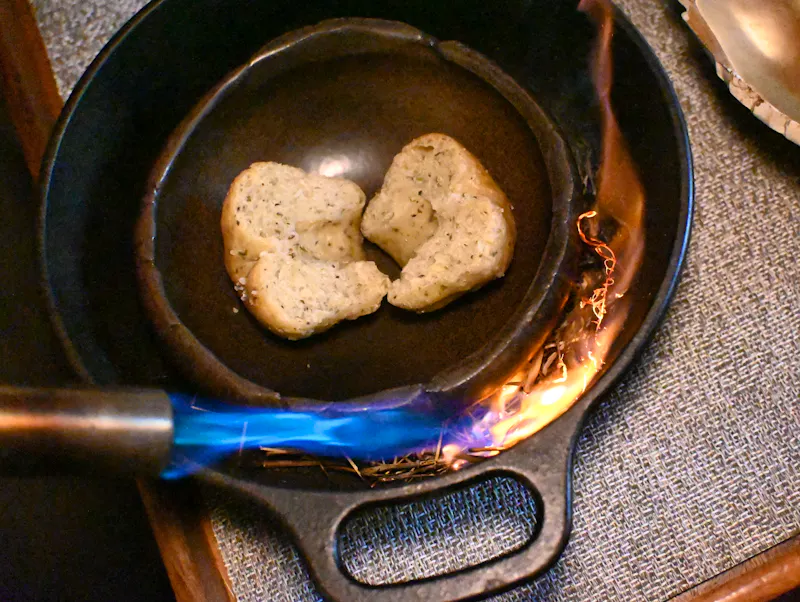
One of the first experiments focused on our lovage brioche. By replacing yeast with sourdough, we discovered a new expression of the product.
This change, seemingly technical, transformed the entire preparation logic:
- longer fermentation time
- a different organization of work
- a more complex texture
- enhanced aromatic depth
Sourdough imposes a different rhythm. It invites us to slow down, observe, and accept that some transformations cannot be accelerated.
This is precisely the philosophy that resonates with our vision of cooking: working with time rather than against it, valuing local ingredients, and allowing the living to express its full richness.
When time becomes an ingredient
In an era where everything moves faster and faster, sourdough reminds us that there is another way to produce, cook, and eat.
A slower, more local, and more respectful way.
Beyond bread itself, it tells a story: a renewed connection between land, grains, artisans, and the plate.
And sometimes, it only takes a little flour, water, and time to rediscover everything that bread can be.
Discover also
GoodPlanet Partnership: Inspiring Children to Embrace Sustainable Food
Elliott Van de Velde, chef at Entropy, together with his non-profit org. HEARTH PROJECT, introduces children to local and seasonal produce through all 5 senses.Entropy at Manger Mieux Demain: tastings & sustainable food workshops
Tasting, sharing, learning together: a look back at Manger Mieux Demain, where we shared our approach to plant-based cuisine & sustainable foodEvent: Domaine Pierre Frick wines at Entropy’s table
On 23 Oct 2026, living wines from Alsace meet plant-based gastronomy with Nat Or Not and Domaine Pierre Frick. Limited places. Booking required.Manger Mieux Demain: reconnecting with the source of our food
Entropy at Manger Mieux Demain: producers, plant-based cuisine, workshops and encounters to shape a more local and sustainable food system.Entropy, Restaurant business for takeover in the heart of Brussels
Entropy, Place Saint-Géry: fully equipped restaurant business for takeover in Brussels. Available from January 2027, starting from €100,000.Why Moby Chose a Plant-Based Restaurant in Brussels
During his visit to Brussels, Moby chose Entropy for dinner. A simple encounter that reflects the values we have shared since day one.Why Hosting Your Event at Entropy Is Unlike Anywhere Else
A historic, sustainable venue in the heart of Brussels for corporate events, private dining, team building, meetings and unforgettable celebrations.Transmission: Building Culture in a Plant-Based Kitchen
Discover how shared knowledge, curiosity, and teamwork shape the culture behind Entropy's plant-based fine dining experience—one service at a time.Every Ending Is a Beginning: Entropy's Next Chapter
We're saying goodbye to daily service and hello to a new way of bringing people together through private events and shared experiences.Plant-Based Proteins: A Source of Culinary Inspiration
When we talk about plant-based proteins, they are often presented as an alternative to meat.Hazelnuts and Walnuts: What Lies Behind the Crunch?
Tree nuts have become essential ingredients in plant-based cooking.Edible Flowers and Aromatic Herbs: Much More Than Decoration
Flavor, texture, volume, freshness, color, and aromatic balance: they have become a true culinary language.Honey: What Role Does It Play in Our Diet?
For many, honey is seen as an alternative to sugar. But if we take a step back, is honey really a sustainable product?Sustainable Food & Plant-Based Cuisine: The Future of Gastronomy
Why Is the Future of Food Plant-Based?Financing Impact Differently: Looking Back on Our Journey with LITA
When citizen finance becomes a lever for impact.Plant-based cuisine: trend or shift, can it appeal to non-vegetarians?
Does plant-based food appeal to everyone? 70% of Entropy’s guests are not vegetarian: what makes them come back?Plant-Based Gastronomy & Commitment: What Are the Training Challenges
How do you train a team when the dishes change with the seasons?What if the perfect pairing wasn’t found only on the plate?
Rethinking the place of beverages in plant-based gastronomy.Think of Entropy for your sustainable plant-based events.
Entropy caters your events from 20 to 600 guests with sustainable plant-based cuisine, both indoors and outdoors.This sustainability label rewards Entropy Restaurant with the highest
Entropy Restaurant receives the Good Food label’s highest distinction in Brussels for the 4th consecutive year, rewarding its committed sustainable cuisine.A NEW MENU GUIDED BY THE SEASON
A new seasonal menu shaped by harvests, featuring asparagus, mushrooms, flowers, and herbs at their peak.From Producer to Plate
In Brussels, Entropy links cuisine to producers with seasonal menus, short supply chains, and local, sustainable collaborations.“It’s not rocket science in your plate!”
Entropy, with Be Planet and Le Bon Moment, launches a campaign to fund a mobile educational caravan on sustainable food for children in Belgium.Pause between two seasons at Entropy, ahead of the reopening on May 21
At the beginning of May, Entropy is taking a short break to follow the rhythm of the seasons. Reopening on May 21 at the start of summer — we look forward to seEntropy closes its restaurant to build a food innovation incubator
Entropy is temporarily closing its restaurant to launch a European project on sustainable food and build an incubator for future food systems.Entropy among Belgium’s most inspiring restaurants
Entropy is proud to be featured by De Morgen among the most inspiring restaurants in Brussels and Flanders, recognizing our sustainable cuisine.Entropy – Top 25 Most Sustainable Restaurants in Europe – 360 EatGuide
Entropy joins the Top 25 sustainable restaurants in Europe by the 360 Eat Guide, recognising pioneers leading the future of responsible gastronomy.Blending Craft & Activism: Entropy enters Collège Culinaire Belgique
At Entropy, craftsmanship meets activism through seasonal plant-led cuisine, conscious sourcing and in-house work, shaping an agile gastronomy rooted in impact.Entropy Restaurant Ranked #10 in Belgium by the 360° Eat Guide
Entropy Restaurant enters Belgium’s 360° Eat Guide Top 10, a recognition of a plant-forward cuisine driven by consciousness, seasonality, and constant evolutionShaping the Future of Food with Hearth Project & Entropy Restaurant
Proud to be selected among the winners of the EU TASTE call and the City of Brussels Climate Plan, advancing sustainable food innovation and climate action.Entropy: 4 years of sustainable gastronomy, 15 of entrepreneurship
In May, Entropy Restaurant celebrates 4 years in Brussels. A project built over 10 years, with plenty of work behind the scenes to get here.DRY JANUARY: Why we love it and what does it say about you.. and us !
Dry January at Entropy is all year round. When alcohol takes a step back: a simple passing trend, or a genuine shift toward preventive health awareness?Elliott Van de Velde, named amongst 50 personalities of tomorrow (BE)
Elliott Van de Velde, among the talents shaping the food systems of tomorrow, according to Trends/Tendances’ 2026 ranking of Tomorrow’s Personalities.Exchange with Andrea Mastropietro, gardener at Piazza Duomo***, Alba.
In Belgium, Andrea Mastropietro and Dries Delanote shared insights on soil, gardeners, and their essential role in a living, plant-based cuisine.For the 5th year, alongside the Green Santa of Secours Populaire.
A collective effort with local partners to support 650 families, reminding us that simple, shared gestures can truly make a difference.Entropy named Discovery of the Year by the We’re Smart Green Guide
An international recognition for Entropy’s intuitive, sustainable and plant-driven cuisine in Brussels.Rétrospective 2025 : une année intense et pilier pour Entropy
2025 leaves behind 12 months of constant dialogue between creativity, seasonality, and commitment. As we enter our winter break, thank you.Expert Panel on Plant-Based Cuisine Techniques, Implications & Passion
Plant-based cuisine through techniques, health, environmental impact and pleasure, shared by chefs, educators and culinary guides.Entropy: The Inspiring Plant-Based Experience in Brussels
Le Vin des Femmes reflects on its experience with us: rethinking our relationship to taste, ingredients, and responsibility.Entropy ranks #74 best plant-based inspired restaurant in the world!
An intuitive and sustainable plant-based cuisine, elevated by bold food & drink pairings. A creative and responsible sensory experience in Brussels.Radilicious: “Entropy and the plant-based world: a captivating story”
“In Brussels, a high-end gastronomy that appeals to everyone. Chef Elliott Van de Velde serves delicious dishes, sourced from a healthy & sustainable ecosystem¨Elliott Van de Velde at Delhaize’s Wonderfood Festival on 11/16/2025!
Fast forward to 2050: At Wonderfood Festival on November 16th, we will talk about how our food choices shape our future, and what actions we can take todayWhy you’ll find us in the TOP 5 most sustainable restaurants in Belgiu
Latest release of 360 Eat Guide is a tribute to our commitment as one of the most holistically sustainable restaurants in Europe360 Eat Guide ranks us among the Top 5 restaurants in Belgium!
Circles for sustainability – Points for gastronomy Beyond grateful to be recognized for the 3rd year among Belgium’s most sustainable gastronomic restaurants!How our food choices influence our health
We no longer die (or far less) from transmissible diseases, but from civilization diseases linked to our lifestyle. Food is a major part of this.Entropy featured among 20 plant-based restaurants in book Radilicious
Radilicious 2: twenty visionary stories, one hundred dishes – the new standard in pure plant gastronomy. Available at our restaurant Entropy for 65 euros!A look back at our 4 Mains gastronomic event on 24 June 2025
A look back at this event presented by Sébastien Ripari and beautifully captured on camera by Mehdy Nasser 🎥A partnership that makes a difference: Thank you, Diamond Europe
Thinking of a civil wedding at Entropy? Yes, it’s possible!
Thierry Schwartz at Entropy: Natural Fine Dining in Brussels
Michelin-starred Thierry Schwartz joined Entropy for a natural, sustainable four-hands dinner in Brussels — the first of a recurring series.Entropy is taking a summer break 🌞
Entropy: Does militant cuisine reshuffle the deck of gastronomy?
L'Eventail" magazine explains the journey of Entropy restaurant & its social purpose within a sustainable and circular business model; extracts - July 2025.Mondays at Entropy: a space for impact-driven events
Privatise our space for your meetings
Our non-alcoholic creations: homemade freshness & exclusive workshops
Did you know?
Your events and private dinners in unique venues — on request!
Our top 10 to follow that make a link between our food and health
Poor nutrition is responsible for nearly 20% of deaths worldwide How can we act to change that?“ Entropy restaurant in Brussels, a real plant-based experience"
In the heart of Brussels, Entropy offers a plant-based experience full of promise...Sébastien Ripari presents a 4-hands Entropy x Thierry Schwartz - 24.06
Entropy hosts a 4 Mains event with Michelin-starred chef Thierry Schwartz on June 24. 2 chefs, 2 visions, 1 shared universe. 10 courses grounded in naturalityEntropy, the soul of the table. Extract from the latest Be Perfect
“Elliott Van de Velde and Adeline Barras define Entropy as a return to simplicity and the human touch.”Entropy top ranked (5 radishes) in the famous We're Smart Green Guide
What a source of pride for our work & team to join this very privileged circle of the 132 best chefs at the forefront of plant-based, committed gastronomy!Gastronomixs : Elliott Van de Velde shares 12 of his recipes!
Goodbye Winter, Hello Spring !
« Zero Waste cooking »
A Masterclass given by chef Elliott Van de VeldeEcological acoustic decoration made from recycled tennis balls
283 tennis balls, or 8.5kg of CO2, used for one square metre of acoustic material.New menu "Jardin": even more options for the undecided!
Now choose between a 4 or 5 sequence menu for your Friday lunch.Appearance in Horeca Magazine
« Reinventing the Horeca sector with commitment and social creativity »Jong Keuken Geweld
Masterclass by Elliott Van de Velde
During the Horeca Forma Be Pro open house, the young chef gave a masterclass on 'Sublimating a Plate Presentation'.La théorie du Boxeur: a film about the resilience of our environment
In the ring today, it's our eco-systems that are being challenged!Unforgettable experiences at Entropy Restaurant
2024, a remarkable year. 2025 here we come!
A year filled with challenges and tremendous support that you have given us.Elliott Van de Velde Young Chef of the Year 2025 Brussels Gault&Millau
‘In this former 18th-century coaching inn, Elliott Van de Velde not only brings out the best in vegetables, he also takes the essence of flavours to the extremeEducating about sustainable food for a more sustainable world
¨Perhaps the best service we can render the population in this context is to refect cooking classes at school, and to encourage them to go to the market¨.We are what we eat. And your choices have a real impact on the world!
💡Many dates to come and experience a free game about teh impact of our food choices (Fresqque de l'Alimentation) at Entropy Restaurant !Gastronomic cuisine accessible to all
The opportunity to taste experienced cuisine at affordable prices in the best gourmet restaurants in Brussels and Belgium with Jong Keuken GeveldThe market gardener is ultimately the first cook
A restaurant is a place for sharing, but also a place for awakening. Our job as chefs , is to transmit messages“The best fertilizer for vegetables is the gardener's shadow”.
Chef and co-founder of Entropy, Elliott Van de Velde has turned to 100% plant-based cuisine. A choice that strengthens ties with his market gardenersBlack, Yellow, Green - Belgium and its sustainable addresses
¨Again a restaurant? ¨ 2 years down the road
When in2022, we were selected from some fifty other project proposals to occupy this unusual listed site in the center of Brussels, we knew it would be more.The movement of life.
At the beginning of July, a meeting with Bordeaux winegrowers. Nearly 11 winegrowers from the Médoc, Libourne and Entre Deux Mers.¨ To have a garden is to benefit from an open-air taste laboratory¨
That's how @restaurantmirazur introduces one of its books, Sous le signe de la lune.Tasty, plant-based alternatives to the club triangle sandwich!
It's World Picnic Day. An opportunity to highlight the tasty, plant-based alternatives to the club triangle sandwich at the corner store!Enjoy a local and sustainable dessert all year long at Entropy
Here, we cater to sweet tooths who don't stray from their values! Don't miss our seasonal desserts, concocted with local produce, whatever the time of year.Season of Bulbs and Onions!
Bulbs and onions in season Leeks, shallots and onions give alliums a run for their money, and illustrate our growers' seasonal vegetables.Organize your next event in our restaurant!
Our plant-based gastronomy restaurant welcomes you in a unique and classified setting with an urban garden in the heart of Brussels.Entropy : a sustainable approach awarded with Good Food label
Entropy is a GoodFood certified restaurant, with a sustainable approach in all its forms and a gastronomic angle right in the heart of Brussels.PLAN YOUR EVENT IN THE HEART OF BRUSSELS
Need to make a booking for a special occasion? Our restaurant is at your disposal for any type of event! Our space is composed of 2 rooms for up to 50 persons !We welcome Spring with a brand new space !
Get ready to embrace sun in our new space as of April, as we offer a spring version of our plant based cuisine, together with natural wines & mocktails2024, 3 times more Entropy
With these new proposals, you'll have no excuse not to come through our doors!Bocuse d'Or
Sustainable Food Award
Entropy Restaurant at home for Christmas
De la Terre à la Table : Zoom sur les fournisseurs durables du restaurant gastronomique Entropy
Plongez dans l'univers des fournisseurs d'Entropy, ces acteurs qui partagent les mêmes valeurs d'engagement que notre restaurant. Découvrez les ici.Prix "Sustainability" Gault & Milau
Hearth Project x 4 Wings Foundation
Une première bougie riche d'actualité
Welcome to Entropy
View more